
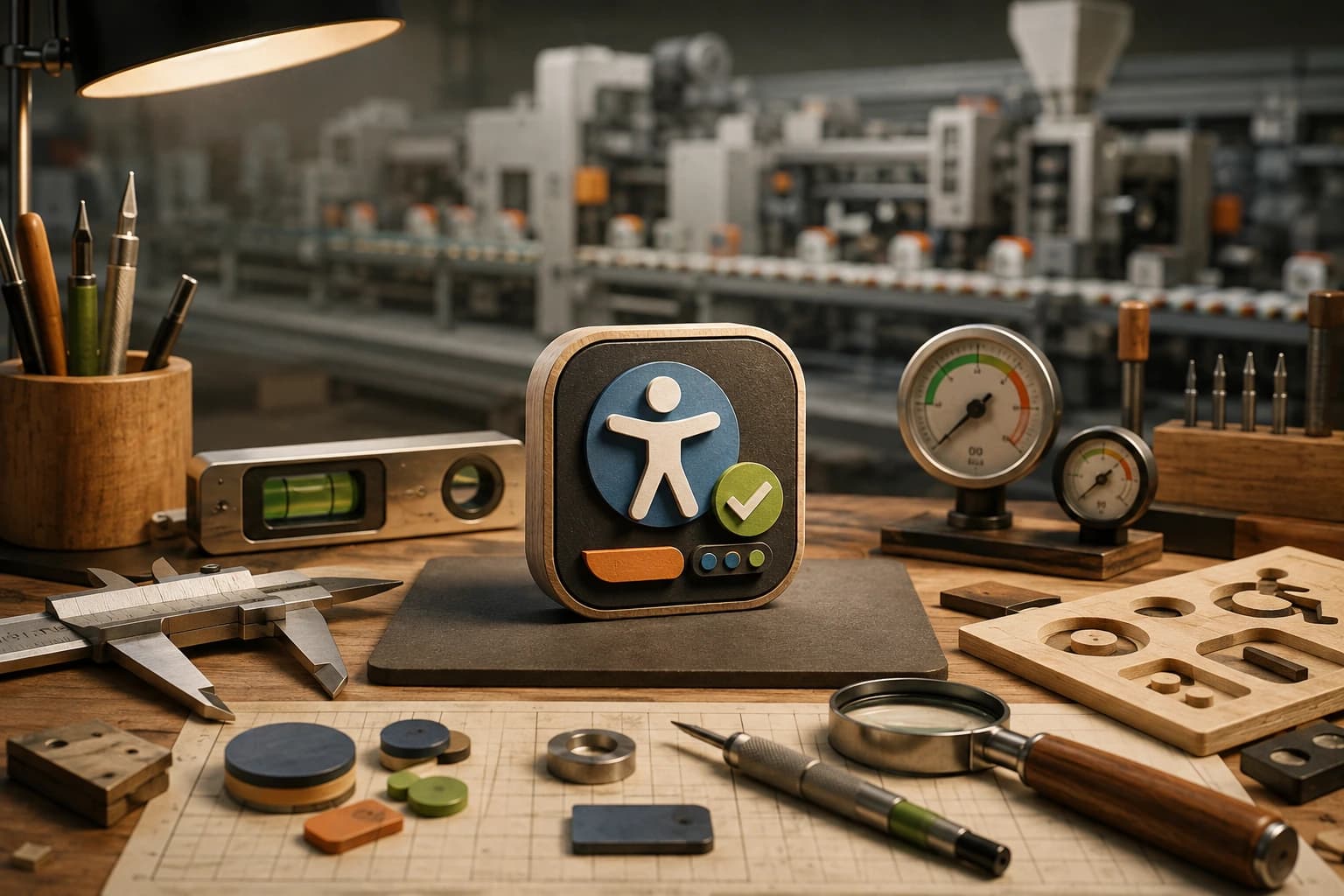
Small technology products are often evaluated through absence. Where is the enterprise dashboard? Why are there fewer integrations? When will the edge case supported by the largest competitor arrive?
The comparison is understandable. Capability matters, and “small” is not an excuse for a product that wastes time or loses trust. But breadth is only one dimension of seriousness.
A smaller team cannot own every feature. It can own its standards.
Narrow the promise
Reliability begins by promising something specific enough to deliver. A product that claims to do everything creates an enormous surface for disappointment. A focused product can identify its essential path and make that path unusually strong.
For BM Sports, the core may be finding the fixture and trusting the live state. For BM Search, it is moving from a question to useful sources. For BM Chess, it is a fair game and a review that teaches. The promise creates an order: first protect what the product is for, then expand.
This focus is not lack of ambition. It is how ambition survives contact with limited attention.
Treat failure as interface material
Large systems fail, and small systems fail. The difference users feel is whether the product recognizes the failure and helps them recover.
A blank panel is not a strategy. A useful error can preserve work, explain what is known, offer a safe retry, and avoid blaming the person. If live data is delayed, show the last reliable update. If an AI request cannot be completed, retain the prompt. If a chess game disconnects, make the clock and reconnection rules predictable.
Edge cases reveal priorities because they are where polish is hardest to fake.
Accessibility belongs in the foundation
Accessibility is sometimes deferred as a feature for later scale. By then, navigation, color, focus behavior, motion, and content structure are embedded across the product.
Building access early is both more respectful and more practical. Semantic controls, readable contrast, keyboard operation, helpful labels, and reduced-motion support improve the underlying quality of the interface. They also prevent the team from mistaking one common way of using a product for the only way.
A small audience still contains people with different bodies, devices, bandwidth, languages, and contexts. Scale is not what makes those differences real.
Make support part of the product
Smaller teams can be closer to the confusion their interfaces create. A support question is not merely a ticket to close; it is evidence about where the product's model and the user's model diverged.
The lesson may belong in documentation, a label, a default, or a redesigned flow. Fixing the underlying confusion compounds. Writing a friendlier reply without changing the product does not.
Direct contact is an advantage only when feedback can travel back into decisions.
Choose dependencies deliberately
No modern product is truly built alone. Frameworks, hosting, data providers, models, payment systems, and open-source libraries make small teams possible. They also create shared points of failure and changes the team does not control.
Seriousness means knowing which dependencies are replaceable, what happens when one degrades, and where a user-facing promise rests on somebody else's service. Independence is rarely isolation. It is the ability to make informed choices and preserve a route forward.
Quality is a pattern of decisions
People do not experience team size. They experience the loading state, the sentence that explains a permission, the result that can be verified, the keyboard shortcut that works, and the data that is still there tomorrow.
Busted Minds is building a growing family of products, and there will always be more we want to add. The standard cannot be feature parity at any cost. It must be coherence: make the important path capable, be honest at the boundary, and repair the details that teach people whether the product can be trusted.
Small products can have large standards because standards are not a headcount. They are the choices a team repeats.

Loading the conversation…