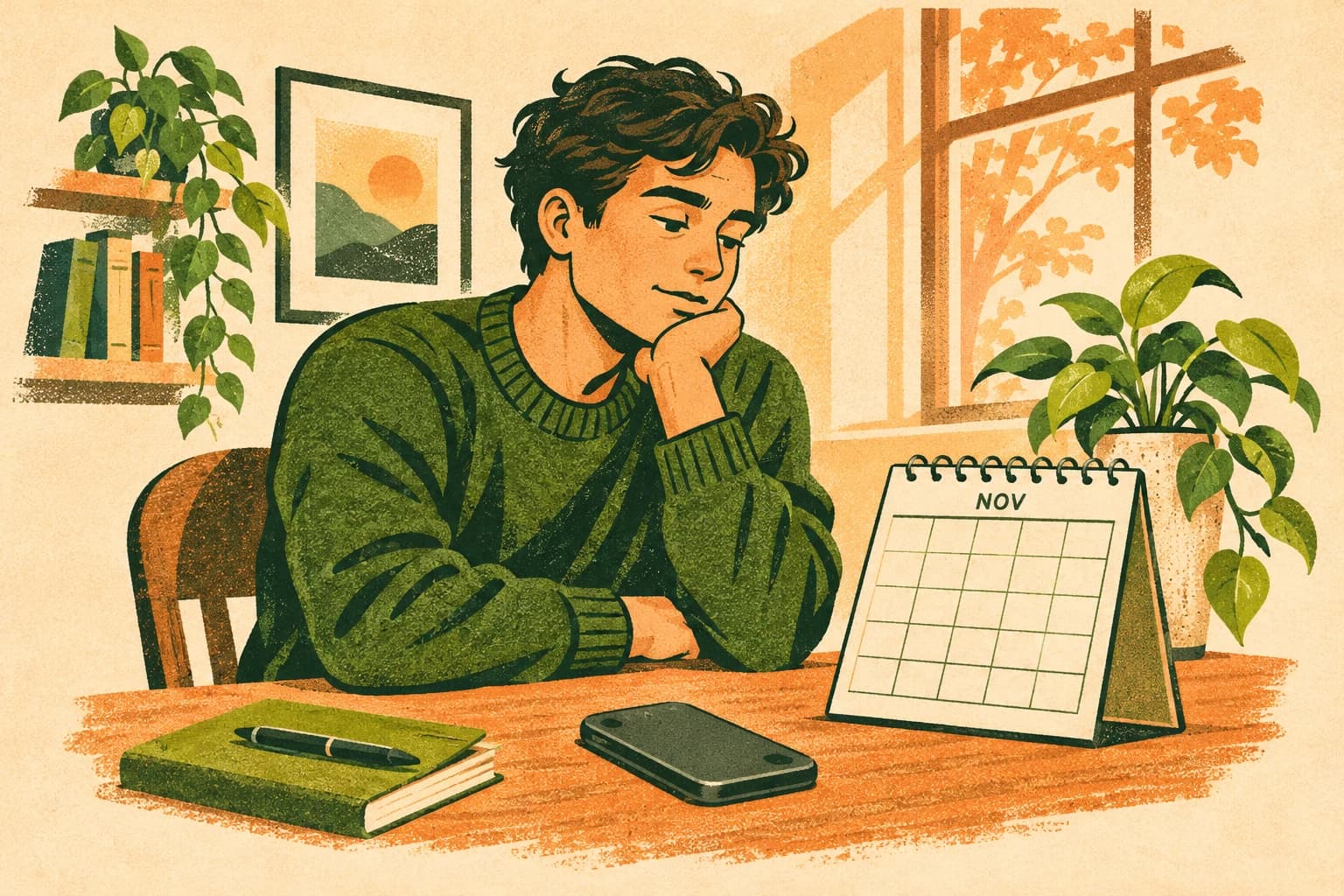
Every November, a private part of life becomes a public scoreboard. Memes announce who is still participating. Videos promise confidence, focus, and a dramatic transformation. Somewhere between the jokes and the advice, a reasonable question gets buried: what does No Nut November actually do?
You can be curious about the challenge without accepting every claim attached to it. The useful starting point is to separate the rules people choose, the health claims that need evidence, and the habits they actually want to change.
What is No Nut November?
No Nut November, often shortened to NNN, is an internet challenge built around avoiding masturbation or ejaculation during November. It has no single, universally followed rulebook. Some people focus on masturbation; others extend their rules to partnered sexual activity or pornography. A 2025 study of the challenge found variation in how participants understood it.
That makes a simple question worth asking before joining: what, exactly, are you trying to do? A break from pornography, a personal period of abstinence, and a competition with friends are different projects. Giving them the same hashtag does not give them the same purpose.
You can also choose not to participate. An internet challenge does not create an obligation to explain your private life.
Does abstaining increase testosterone or improve focus?
The International Society for Sexual Medicine (ISSM) says claims that semen retention increases testosterone or improves overall mental and physical health are not supported by scientific evidence. A compelling personal story is not enough to establish a biological effect.
Suppose someone puts their phone away earlier, changes their evening routine, and spends less time watching sexual content. If their days feel better, several things changed at once. Their experience may matter to them, but it cannot tell us which change caused the improvement. It certainly cannot establish that retaining semen was responsible.
Research directly examining NNN is still limited. The 2025 survey study collected responses from 435 people before the challenge and 114 afterward. Over the abstinence period, the measured sexual wellbeing outcomes did not differ significantly between participants and nonparticipants.
That result needs a careful reading. It was a self-report survey with substantial loss of respondents between surveys, rather than a randomized trial. It examined sexual wellbeing, not every claim made about hormones, productivity, or athletic performance. It does not establish that every participant will have the same experience.
Masturbation is not a failure of discipline
The ISSM's guide to masturbation myths describes masturbation as a normal sexual activity and rejects claims that it causes problems such as blindness or infertility. Choosing to abstain can be a personal decision; treating masturbation itself as evidence that someone is weak adds a judgment that the health evidence does not support.
There is also no single normal frequency. Some people masturbate frequently, some occasionally, and some never. Counting occasions alone gives you very little context.
More useful questions concern everyday life: is the behavior interfering with work, relationships, or responsibilities? Is it causing irritation or distress? The ISSM advises discussing concerns such as compulsive behavior or interference with daily life with a healthcare provider or sex therapist.
Choose a goal you can actually evaluate
If the appeal of NNN is a chance to reconsider a habit, make the goal specific. The following is a reflection exercise, not a treatment plan:
- Name the concern. Write something concrete, such as spending longer online than you intended or repeatedly delaying bedtime. Avoid turning your whole identity into the problem.
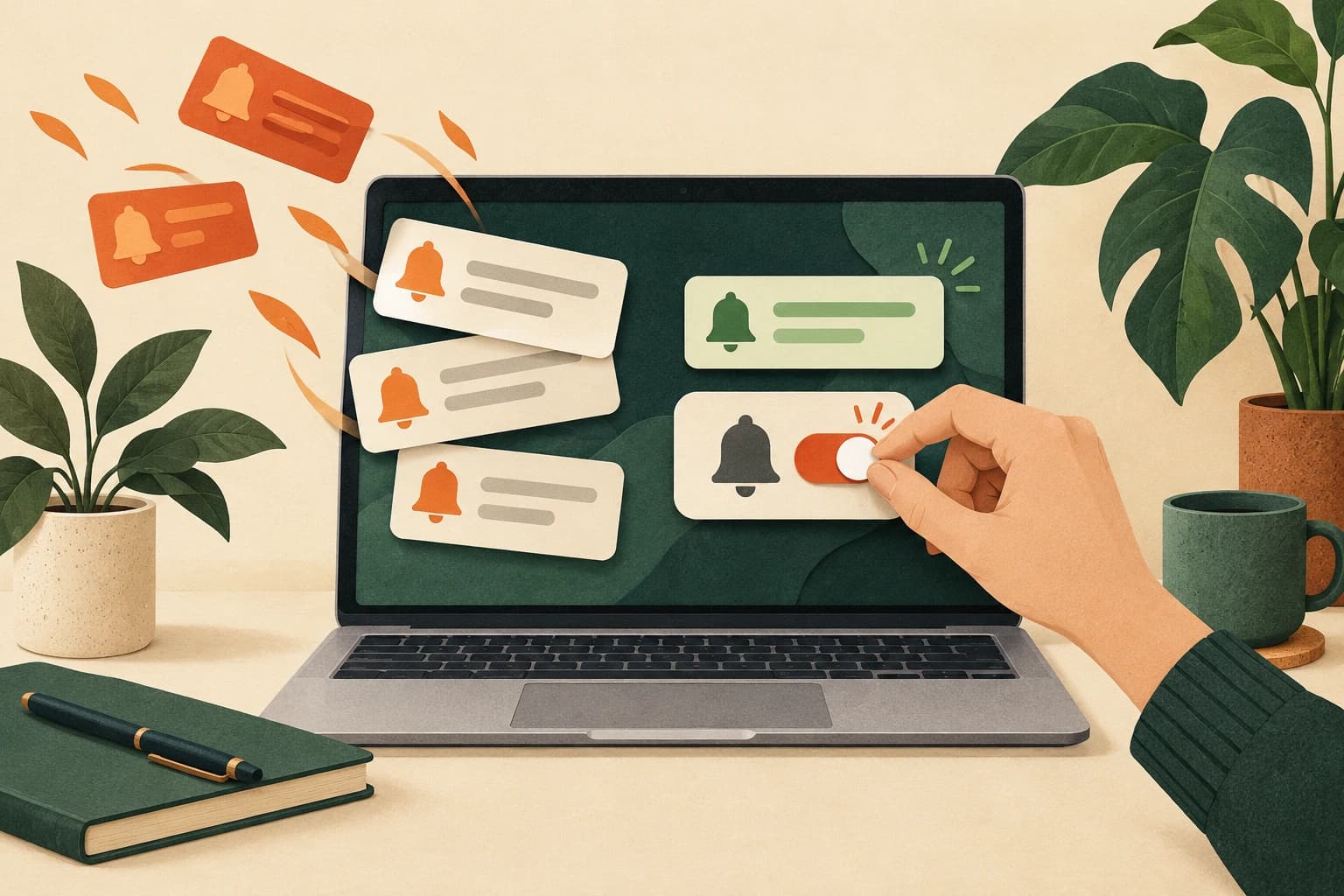
- Choose one manageable boundary. For example, leave your phone outside the bedroom. A clear boundary is easier to evaluate than a promise to become a completely different person.
- Decide what to observe. You might note when you put the phone down, whether you kept your intended bedtime, or how much time the activity took.
- Review the pattern after a week. Ask whether the boundary addressed your original concern. Keep, adjust, or drop it based on what you notice.
This exercise can also reveal that the issue you care about is scrolling, loneliness, or an unstructured evening. You do not need to force every observation into a story about sexual restraint.
 Choose a concrete boundary and observe whether it helps with your original concern. AI-generated conceptual illustration.
If you change your mind or miss a goal, record what happened without making a verdict about your worth. A streak tells you how many days met a rule. It does not explain your circumstances or decide what to do next.
When a challenge is not enough
If sexual behavior feels difficult to control and is causing problems, professional support is more useful than a comment section. Mayo Clinic describes warning signs including repeated unsuccessful efforts to reduce the behavior and continuing despite serious effects on everyday life or relationships.
A clinician can help assess the situation. An online streak cannot diagnose a disorder, and completing November is not proof that a problem has been treated. You can seek help without waiting for the challenge to end.
Make room for a broader November
NNN should also be distinguished from Movember, the men's health charity whose priorities include mental health and suicide prevention, prostate cancer, and testicular cancer. A viral abstinence challenge and a health fundraising movement serve different purposes.
For your own November, choose an action you can explain in ordinary language: make time for a friend, address a concern you have postponed, or examine a habit that keeps getting in the way. If you take part in NNN, let the goal remain yours to evaluate. You do not owe the internet a performance of self-control.
Prepared with AI assistance and checked against the linked research and clinical guidance. This article provides general information, not individualized medical advice. Illustrations are AI-generated concepts.

Loading the conversation…