

Search is often described as retrieval: a person submits a query, the system finds relevant documents, and the best result rises to the top. That description is accurate in the way a map is accurate. It names the landmarks and leaves out the journey.
People rarely arrive with a complete query. They arrive with half-remembered language, an unfamiliar problem, or a question whose important distinctions they do not yet know. Searching changes the question. A result teaches a term; the term reveals a disagreement; the disagreement creates a better search.
That makes search part retrieval and part reading.
A result needs a reason
Traditional results provide a title, address, and short excerpt. These elements do more than preview a page. Together they make an argument about why the page deserves attention.
The argument can be weak. An excerpt may repeat the query without answering it. A familiar domain may rank through authority while a primary source sits lower. A recent page may inherit an old publication date after a trivial update.
BM Search should help the user inspect relevance before spending the click. That can mean a clearer description of the page, visible date context, source type, or a short indication of which part addresses the query. Explanation does not have to become clutter. It has to answer the quiet question behind every result: why this?
Queries evolve through vocabulary
Experts search differently because they know the words a field uses. A person new to accessibility may search for “keyboard website problem” before learning about focus order. Someone debugging software may describe a symptom before discovering the exact error category.
Search can bridge that gap without replacing the user's intention. Related terms, narrower interpretations, and meaningful distinctions help someone acquire the vocabulary of the problem. The interface should make these suggestions revisable, not silently rewrite the query and pretend it was always correct.
A better term is often more valuable than an immediate answer because it opens an entire body of useful material.
Reading across sources
No single result is sufficient for every task. Documentation may state how a feature should work. A community thread may reveal how it fails in practice. A news report may describe an event, while a public record establishes the underlying fact.
Search should make those roles legible. Diversity is not simply showing ten different domains. It is showing different kinds of evidence that help a person build an understanding.
AI synthesis can provide a map, especially when a topic is unfamiliar. But a map should preserve roads. Citations need to lead to the precise source, and the summary should not erase disagreement for the sake of a smoother paragraph.
Freshness is part of meaning
The right answer often depends on when the question is asked. Software documentation changes. Prices move. Laws are amended. Teams play another match. A timeless-looking result can be dangerously comfortable.
Good search treats dates as semantic information. It distinguishes the date of an event from the date an article was published and the date a page was cosmetically updated. When freshness matters, the interface should say so. When an older source remains authoritative, recency should not automatically bury it.
This requires judgment, not a universal “latest” switch.
The result page is a beginning
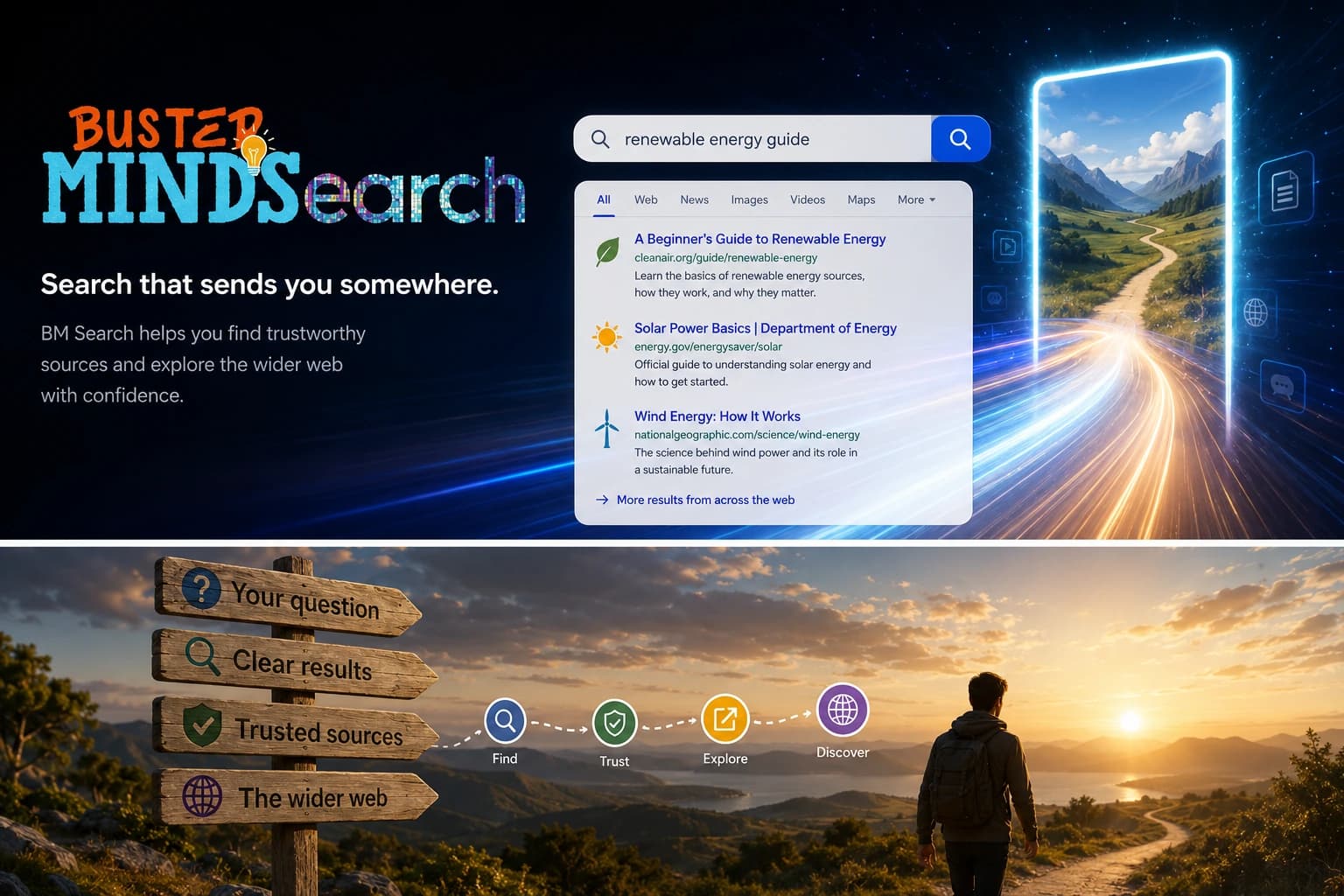
The purpose of BM Search is not to win the user's attention from the web. It is to improve the passage into it.
Success may be the official page found immediately. It may be a set of sources compared carefully, a better phrase for the next query, or a recognition that the original question contained two separate problems. All are forms of progress.
Search is an interface for finding, but it is also an interface for deciding what deserves to be read. When it supports that decision honestly, the wider web becomes not only reachable but understandable.


Loading the conversation…