

Most consumer software begins with a question about retention: how do we get a person to come back tomorrow? A serious chess product should begin somewhere else: what will the player understand tomorrow that they could not see today?
Those questions can produce the same button, notification, or post-game screen. They do not produce the same product. One treats attention as inventory. The other treats attention as a commitment the player has made—to a game, to an opponent, and to the uncomfortable business of getting better.
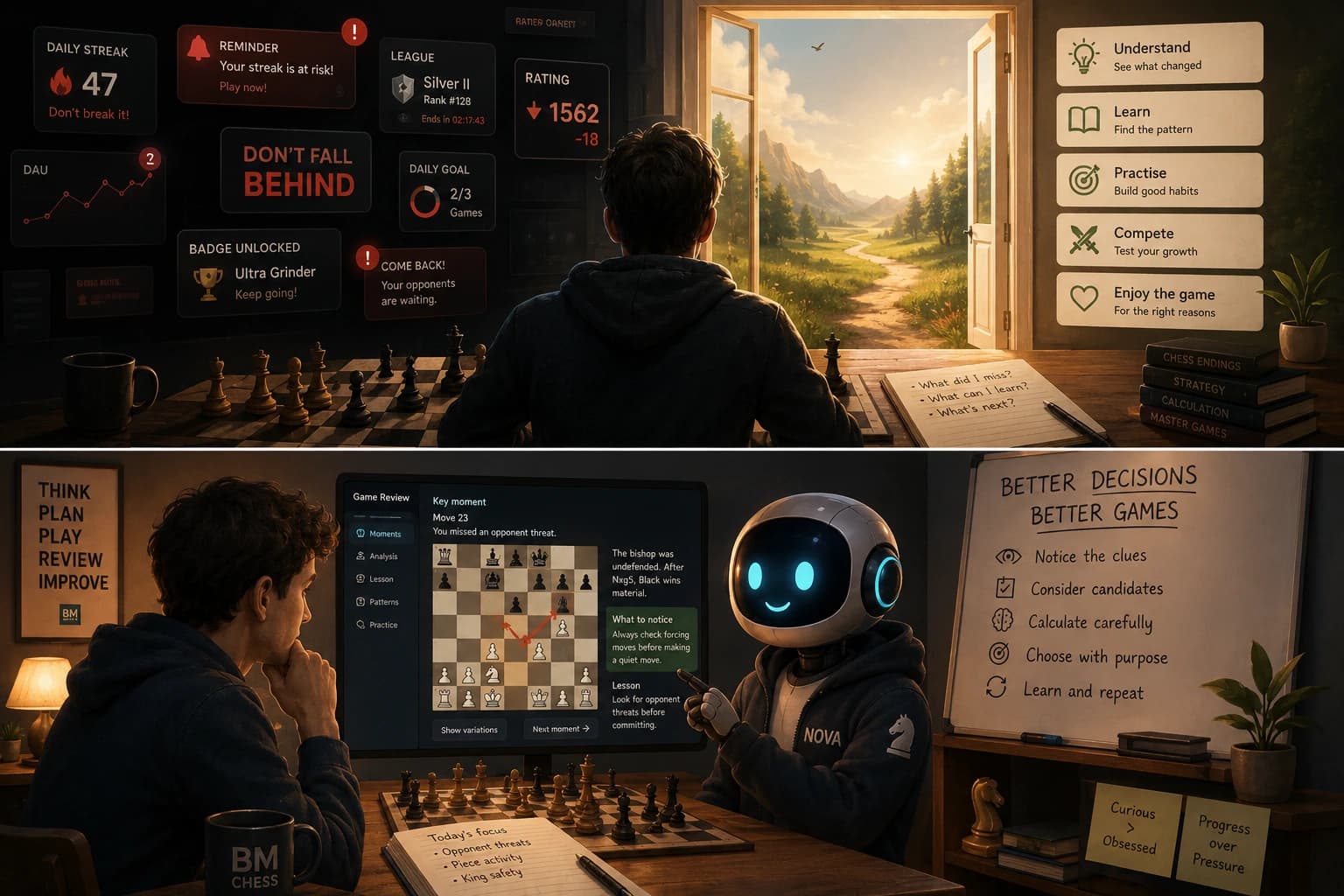
Chess is unusually vulnerable to engagement machinery because the game already supplies powerful emotional material. A win can feel like proof. A loss can feel personal. A rating turns thousands of decisions into one clean number, then quietly invites us to mistake that number for a verdict on intelligence. There is no need for a product to manufacture tension; the board has enough.
The design task is therefore not to make chess more compulsive. It is to help ambition remain healthy.
When motivation becomes extraction
Streaks, leagues, badges, and reminders are not inherently cynical. They can help a beginner establish a practice or give distant friends a reason to meet. The trouble begins when the mechanism stops serving the activity and the activity starts serving the mechanism.
A streak that makes a player choose a thoughtful twenty-minute game can be useful. A streak that pressures the same player into making any move before midnight has preserved the metric and damaged the habit. A league can create friendly stakes. It can also make rest feel like falling behind. The interface looks nearly identical in both cases; the difference is what the system rewards.
This is the central temptation of product design: the number that is easiest to increase is rarely the thing that matters most. Sessions are countable. Insight is slower. A daily-active-user chart rises immediately when anxiety brings someone back. It does not reveal whether that person is building a durable relationship with chess or merely servicing an obligation created by the app.
The game deserves a longer horizon.
Improvement needs to be legible
After a loss, players are often given either too much information or too little. Too little is a verdict: a red mark, an accuracy score, an engine line. Too much is a wall of variations that may be correct but teaches nothing. A machine can identify the best move without identifying the lesson.
A useful review should compress the game into a small number of moments a human can carry forward. Where did the position change character? Which candidate move deserved consideration? Was the error tactical, strategic, or practical? What clue was present on the board before the mistake appeared?
That last question matters. Telling a player that a move was wrong improves the record of the past. Teaching them what to notice improves the next decision.
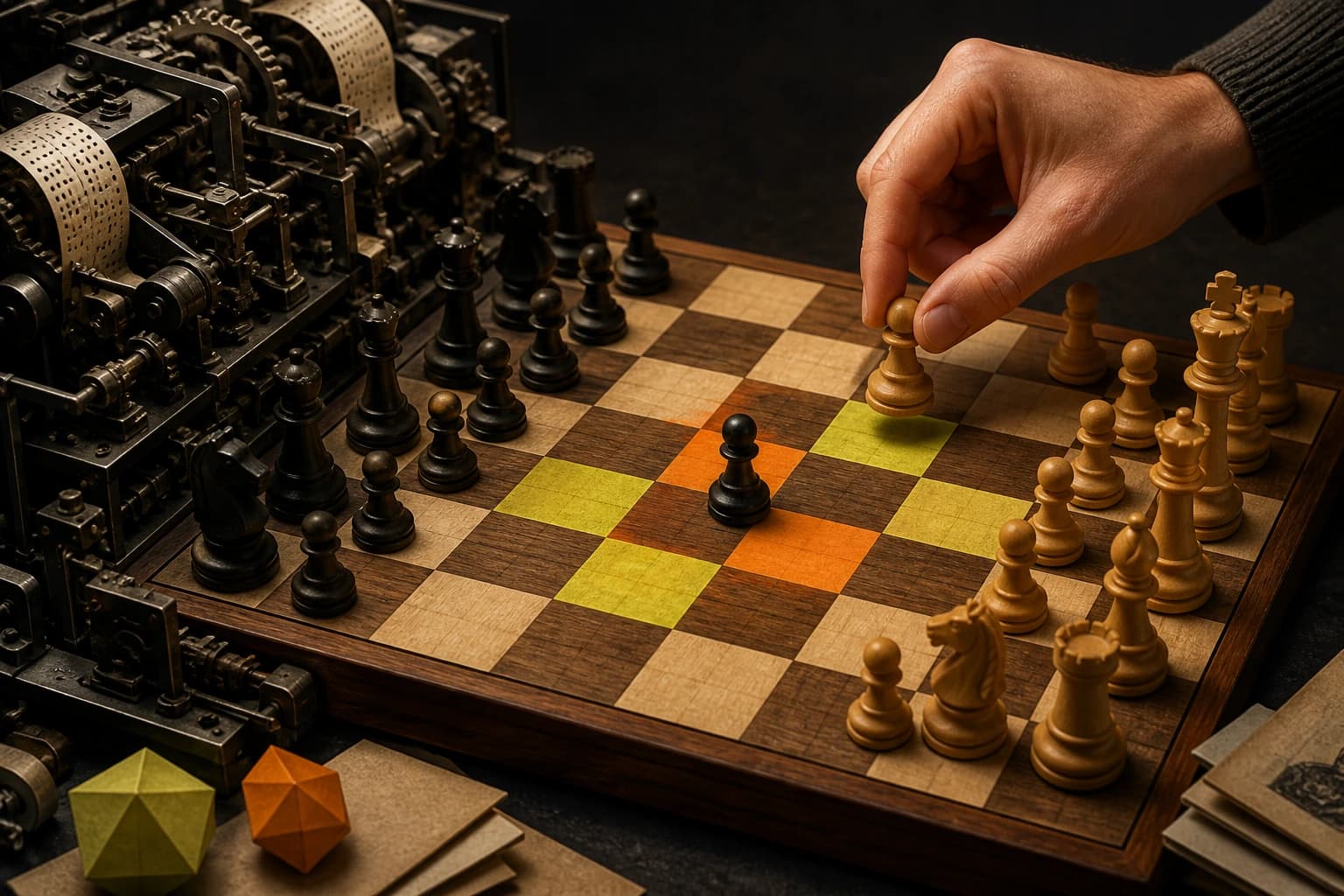
This is the standard we are pursuing with Nova AI in BM Chess. The value of intelligence is not that it can calculate more deeply than the player. Ordinary engines already do that. The value is translation: turning calculation into an explanation, an explanation into a pattern, and a pattern into judgment the player can use without the machine.
The best analysis does not make the engine look intelligent. It makes the player more perceptive.
A rating is a signal, not a self-portrait
Competition becomes meaningful because outcomes matter. Removing every sharp edge would make the experience dishonest. But products still choose how to frame those outcomes.
A rating is useful because it compresses performance into a rough matchmaking signal. It is not a measure of a person's ceiling, creativity, discipline, or worth. Interfaces blur that distinction when the rating dominates every screen, every comparison, and every emotional beat after a game.
Good design restores proportion. It gives the result enough weight to feel real and enough context to remain useful. It makes review easier than revenge. It can show progress through the quality of decisions, the recurrence of a pattern, or the ability to handle a type of position—not only through a line that rises and falls.
The goal is not to protect players from losing. It is to protect the meaning of losing from being flattened into humiliation or converted into another retention lever.
Serious does not have to mean hostile
Chess culture sometimes confuses seriousness with severity. A serious product must be accurate, fast, and trustworthy. It does not need to feel like a locked study hall. Warmth, playfulness, and personality can lower the cost of beginning without lowering the ceiling of mastery.
That is why a guide such as Nova matters beyond analysis. A coherent character can make explanation feel less like a system issuing a grade and more like a coach opening a conversation. The standard is demanding: personality must never conceal uncertainty, substitute charm for substance, or patronize the player. Delight should make depth approachable, not disguise its absence.
Beginners deserve language they can understand. Strong players deserve tools that do not get in their way. Both deserve an experience that assumes their time is valuable.
The BM Chess test
We can reduce the philosophy to a practical test. After using BM Chess, can a player answer at least one of these questions more clearly?
- What happened in that game?
- What pattern did I miss?
- What should I practise next?
- Which decision did I handle better than before?
- Do I want another game because I am curious, rather than because the product made stopping feel like failure?
Not every session must become a lesson. Chess is also play, surprise, style, rivalry, and the strange pleasure of discovering that an apparently quiet move changes everything. A product that turns every game into homework would misunderstand the thing it claims to teach.
The aim is a healthier loop: play creates questions; analysis clarifies a few of them; practice changes what the player notices; the next game creates better questions. Technology belongs inside that loop only when it strengthens the player's agency.
Stewardship, not capture
No platform owns chess. The game existed before software companies and will outlive them. Every chess product is, at best, a temporary steward of a culture built by players, clubs, teachers, organizers, writers, and generations of opponents sitting across from one another.
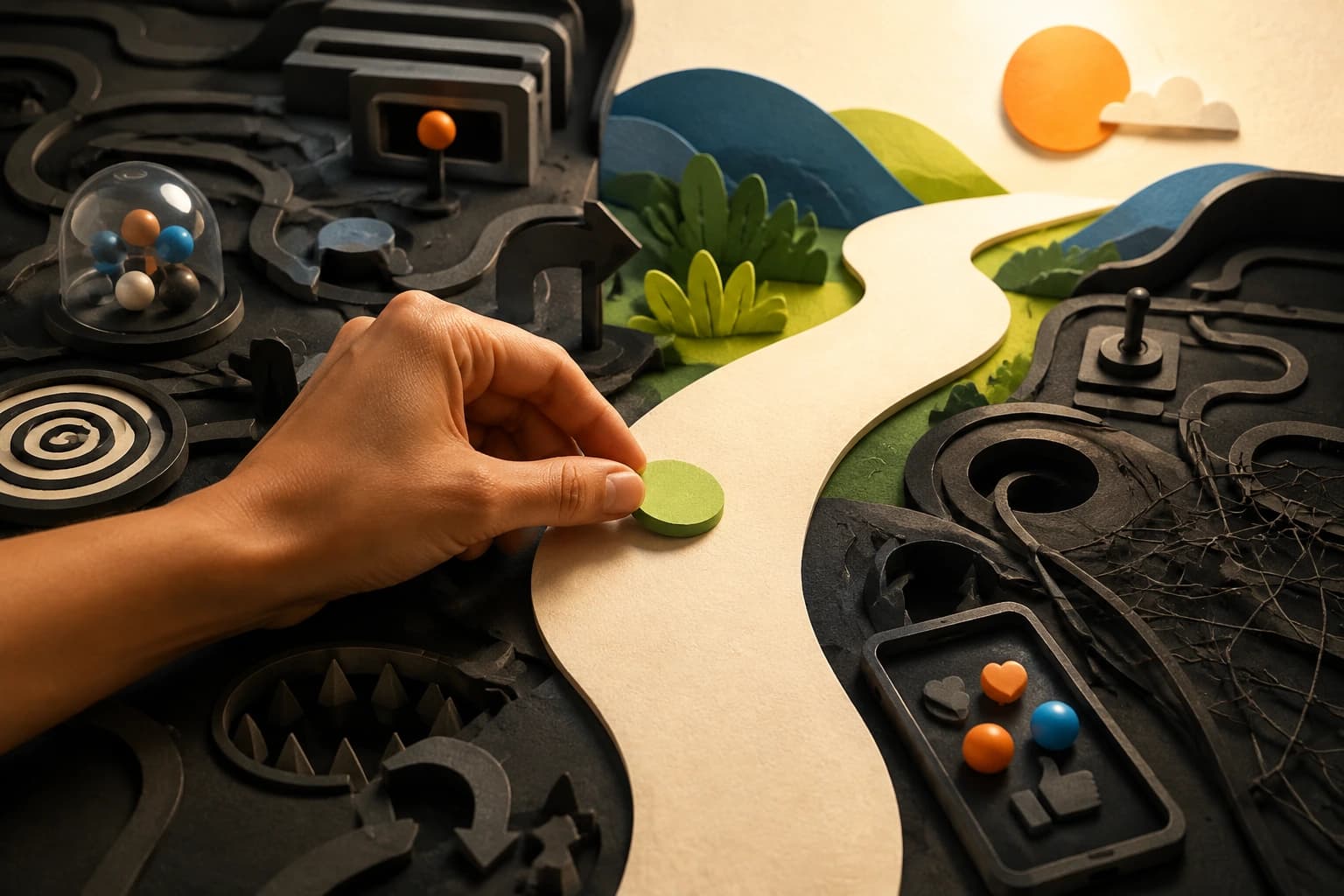
That perspective changes the job. The objective cannot be to capture the largest possible share of a player's attention and then make departure expensive. It must be to earn a place in the player's chess life by being useful, fair, and enjoyable.
BM Chess is our attempt to build from that premise. We will make mistakes. We will discover cases where a helpful nudge becomes noise, where an explanation is too shallow, or where a competitive feature produces the wrong pressure. The promise is not perfection. It is that the direction of correction will be guided by the game and the player, not by a need to manufacture dependence.
Chess has survived for centuries because it does not run out of things to reveal. A product should respect that abundance. It should not make the player feel trapped. It should make the board feel larger.

Loading the conversation…