
Journal topic
Chess & learning
The craft of improvement, competition, and building technology that respects the game.
6 articles
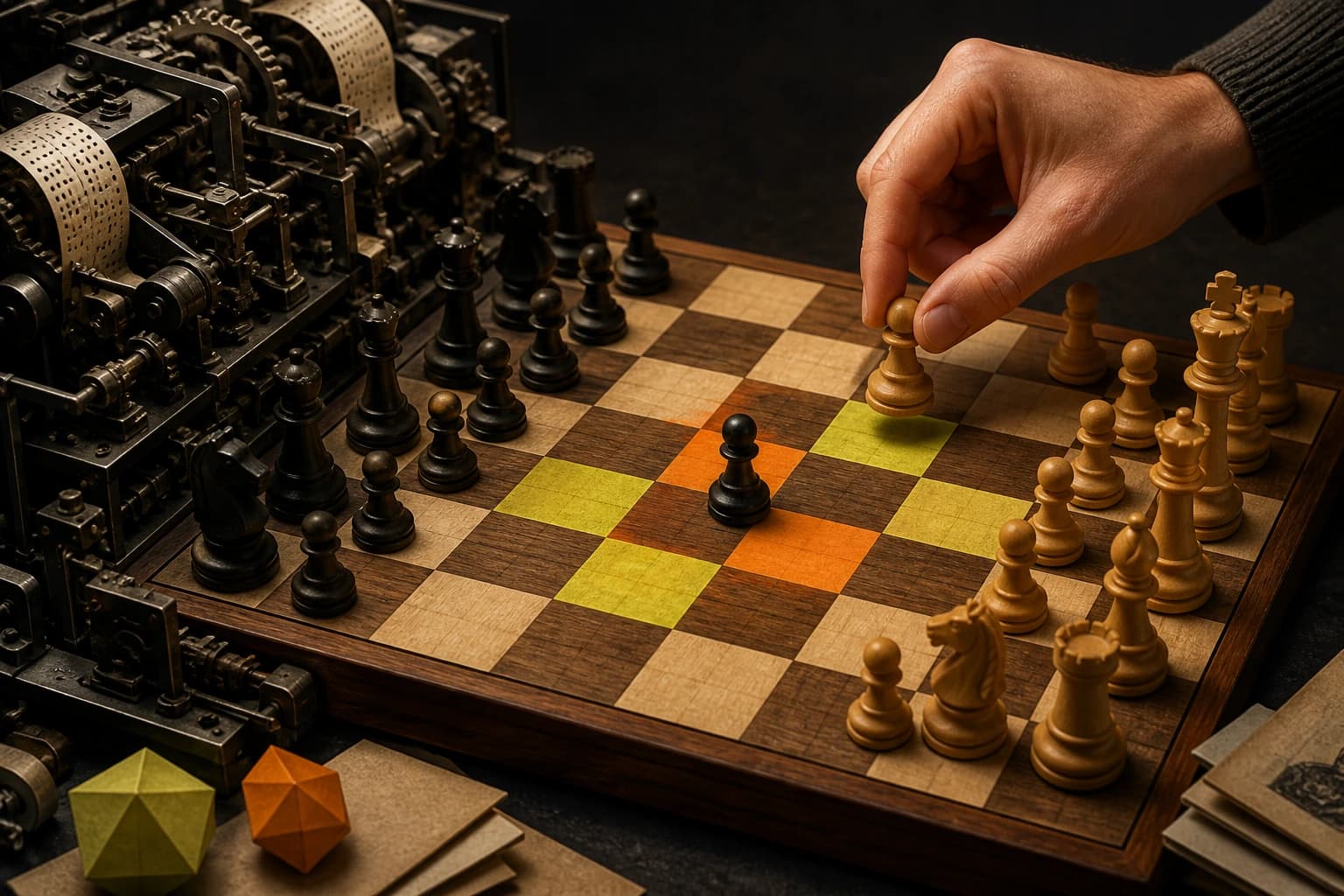
A chess engine is not a chess teacher
The best move is only the beginning of an explanation. Useful chess technology must turn calculation into a pattern a player can recognize again.
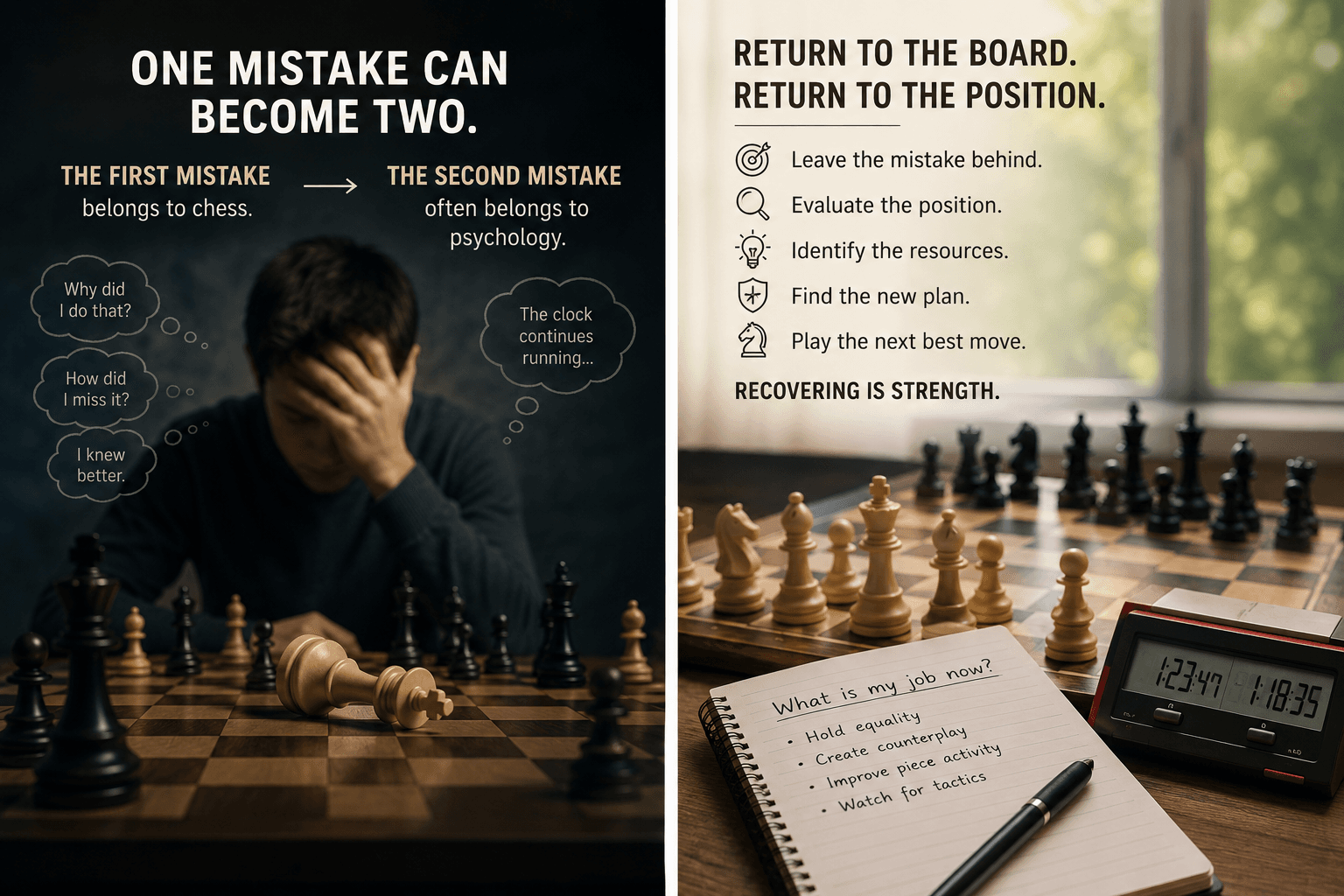
The Game After the Mistake
A mistake changes the position. What happens next reveals something deeper: whether we can let go of what was and respond intelligently to what remains.
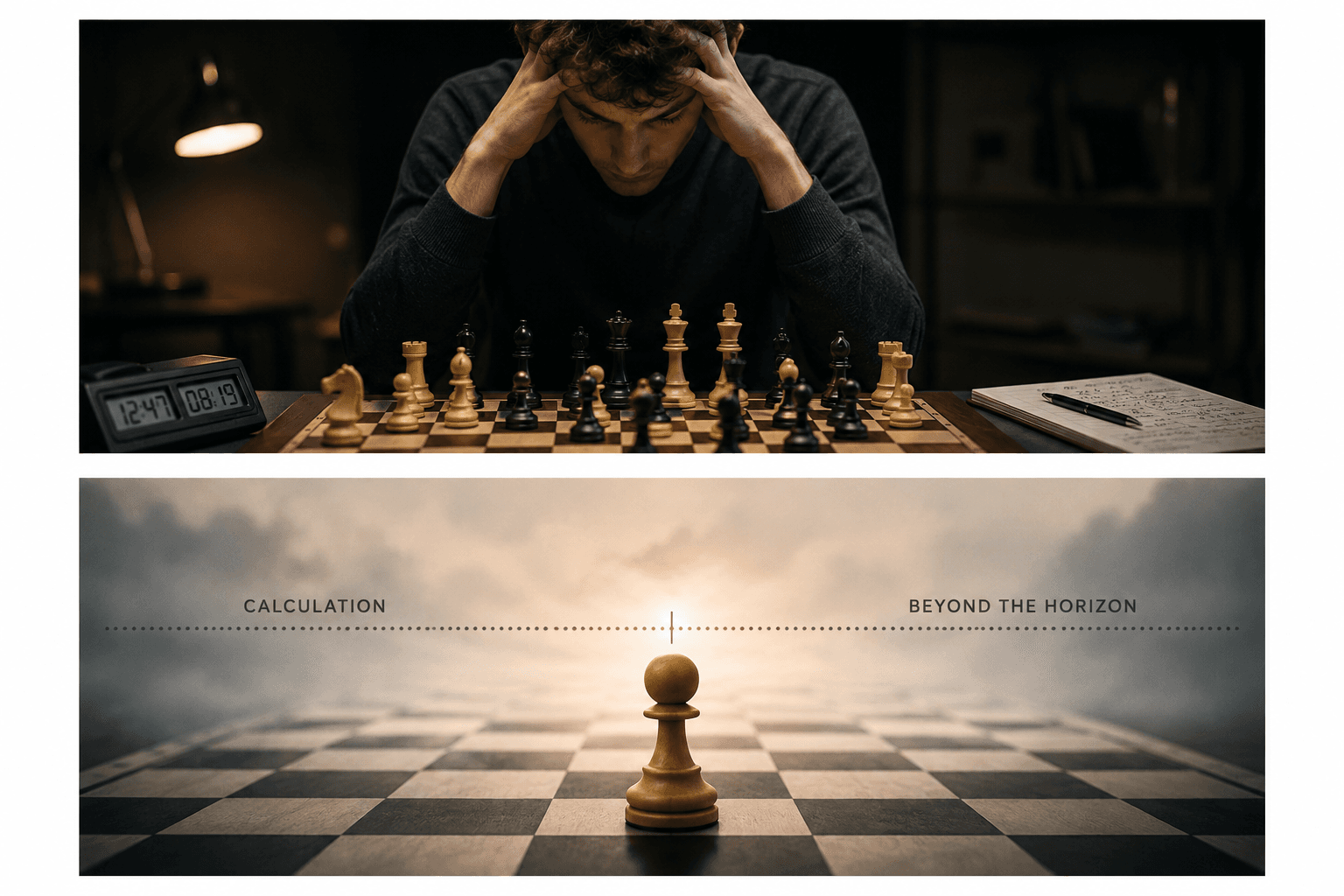
The Position You Cannot Prove
The strongest decisions are not always certain. Chess teaches us how to think clearly, judge what matters, and commit when calculation runs out.
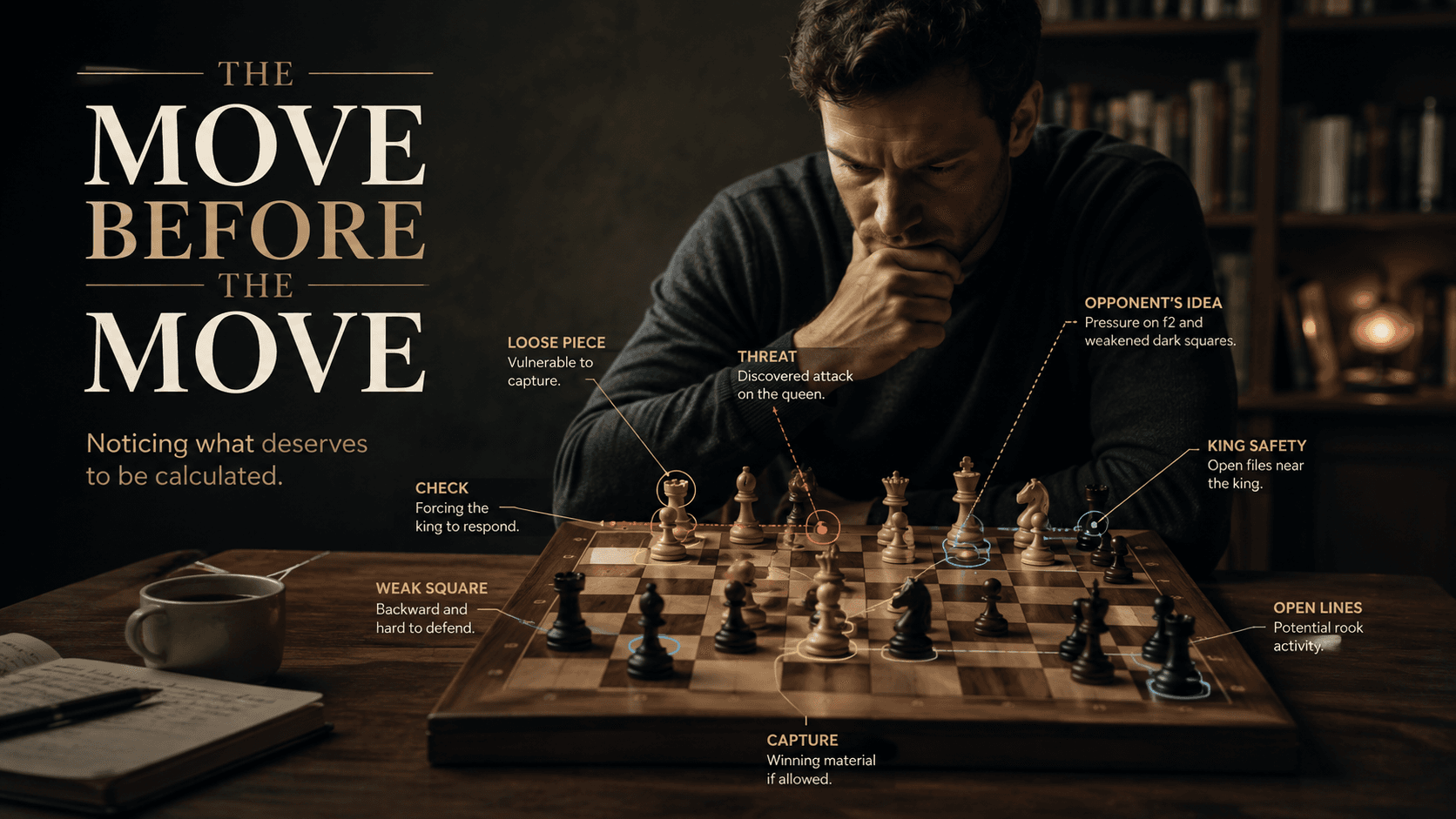
The Move Before the Move
Most chess mistakes don’t begin with bad calculation—they begin with looking at the wrong thing. The Move Before the Move explores how stronger chess starts with attention: noticing what changed, questioning the obvious move, spotting hidden threats, and knowing what deserves calculation. Improvement isn’t about seeing everything. It’s about missing less of what matters.

The Infinite Game Played on Sixty-Four Squares
Chess is more than a game, it is a battle of foresight, psychology, and precision played across just 64 squares. Every move carries consequences, every sacrifice tells a story, and every position challenges the player to balance calculation with instinct. Simple to learn but impossible to fully master, chess has endured for centuries because it reveals something timeless about the way we think.

Chess deserves better than an engagement machine
The strongest chess product does not squeeze anxiety into a streak. It gives players a clearer relationship with improvement, competition, and the game itself.